Edge Intelligence
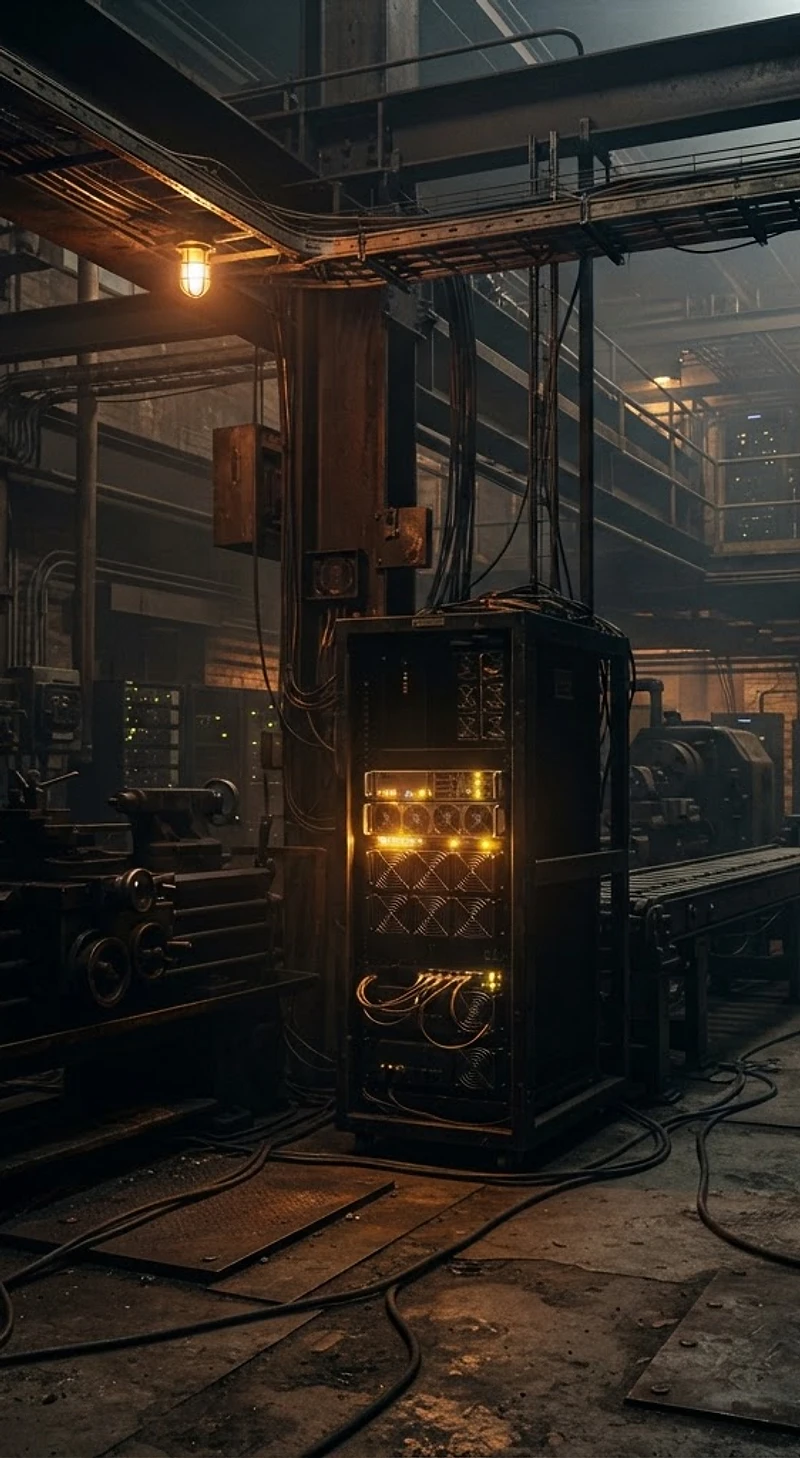
SynapticSteel is designed to move beyond edge data collection. The goal is to keep evidence, machine-specific history and operational context close enough to the asset that understanding can persist even when outside systems are unavailable.
Edge intelligence should preserve machine experience, not just process data.
Edge systems can collect, filter, forward, analyze, and react to data in many useful ways. SynapticSteel adds a different emphasis: the edge can also become the long-term home of machine-specific experience.
SynapticSteel is being built around a stronger edge: physical evidence, temporal history and attributable human context can remain close to the machine, while interpretation stays separate from the authority to act.
Edge intelligence is a chain of responsibilities, ending in human authority.
Physical evidence is structured and retained through time. Human observations, schedules and operational judgment add attributable context. Interpretation can combine those sources, but the authority to make consequential changes remains a separate governed boundary. The machine informs; authorized people decide.
Structured physical facts
Persistence & change
Purpose-fit interpretation
Capital & intent
Operational knowledge & history
Human judgment & control
Machine interpretation and human responsibility meet at one governed boundary.
The cloud can be useful without becoming a dependency
The edge is where physical context originates. SynapticSteel is designed to preserve useful capability there.
Low-latency interpretation
Physical events can be processed near the source instead of waiting for a round trip to a distant cloud service.
Resilient operation
The architecture is intended to keep useful sensing and local interpretation available when connectivity is limited or intentionally absent.
Data stays closer to the floor
Raw industrial observations do not need to become a permanent cloud upload merely to produce a useful local conclusion.
Heterogeneous compute
Signal processing, computer vision, temporal models and higher-level reasoning can be assigned to the execution path that fits the job.
The edge can accumulate experience, not just execute code.
Moving computation closer to a machine solves latency, bandwidth and connectivity problems. SynapticSteel is being designed to keep something more valuable there too: the evidence and behavioral context that explain how that machine has been changing.
Respond close to the source.
Process high-rate physical data near the asset so useful interpretation does not depend on sending every sample somewhere else first.
Remember what the machine has been doing.
Retain episodes, observed states, drift, recurrence and evidence lineage so the next observation can be compared with an accumulated behavioral history rather than an empty window.
Let the intelligence change without erasing the experience.
Models can be upgraded or replaced. The evidence-backed history of the asset should remain available to whatever specialist interprets it next.
The intelligence is a system, not a single box.
This conceptual architecture view shows the relationship between coordination, compute, temporal intelligence, protected transport, and the presentation layer. The moving paths make the handoffs visible without implying that every illustrated security control or state is live production telemetry.
Concept visualization · architecture roles, not live topology
Training teaches what might happen. Operational memory records what happened here.
Broad models, simulation and prior datasets can give an intelligent system useful starting capability. SynapticSteel is being designed so deployment begins another kind of learning: an evidence-backed history of the actual asset and environment.
Bring prior capability.
Signal methods, perception models and specialist reasoning can arrive with knowledge learned elsewhere. That gives the observer a useful starting point rather than forcing every deployment to begin from zero.
Accumulate local experience.
Once assigned, the system can retain this asset's observed states, episodes, changes, interventions and outcomes. That operating history is different from generic training data because it belongs to this machine, in this place, under these conditions.
A useful answer should be able to show where it came from.
SynapticSteel is being designed so higher-level interpretation does not float free of the physical record. Conclusions can retain links to the observations, derived evidence, temporal context and system changes that caused them to exist.
From conclusion back to evidence.
A finding should be able to point backward through the reasoning chain: the temporal pattern that mattered, the features that supported it, and the physical observations those features came from.
Remember what happened after something changed.
A model update, configuration change, maintenance action or operator intervention can become part of the same timeline as the physical response. Later reasoning can ask whether behavior began before the change, after it, or not at all—and whether a similar intervention succeeded or failed previously.
An industrial intelligence system should be able to explain more than the alarm.
The goal is not a dashboard full of confidence scores. It is enough retained evidence and context to support practical questions about cause, sequence, recurrence and response.
Why does it think that?
Show the evidence and temporal relationships supporting the interpretation.
What changed first?
Preserve sequence so a later symptom is not mistaken for the beginning of the event.
What supports the conclusion?
Keep the physical observations, derived evidence and context behind the finding.
Did anything else change at the same time?
Place physical, machine, software and infrastructure changes on a comparable timeline.
Have we seen this before?
Compare the current trajectory with retained episodes instead of relying only on a static threshold.
What happened when we responded last time?
Remember interventions and outcomes—including responses that failed to improve the condition.
Interpretation has boundaries.
SynapticSteel is not being built around one opaque answer expected to do everything. Different forms of evidence and interpretation can remain specialized and attributable. The important architecture is the continuity between observation, history, context, belief and authority.
Reasoning is not authority.
A model can observe, interpret or recommend without earning the right to make a high-impact physical or software change. SynapticSteel keeps that boundary explicit by design.