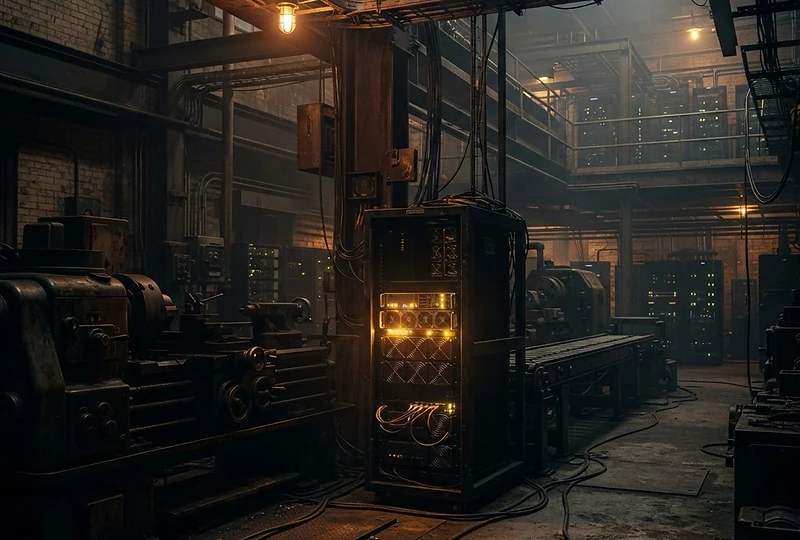
Industrial Environments
The physical world does not arrive as a clean dataset. Industrial equipment operates under changing loads, speeds, temperatures, materials, maintenance conditions and environments—while vibration, acoustics, thermal behavior, motion, electrical activity and system events tell different parts of the story. SynapticSteel is being developed to observe those signals together over time, preserve the evidence around change, and give maintenance and reliability teams deeper machine-specific context without taking the human out of the decision.
Built for the space between an alarm and an explanation.
Industrial monitoring is already full of excellent instruments. The problem is that each instrument usually sees only the slice of reality it was designed to measure.
Physical AI is often associated with robots, autonomous vehicles and machines that sense so they can move. SynapticSteel is pursuing another useful form: a persistent industrial observer can perceive, retain context and reason about change even when it never turns a wheel or moves an actuator.
SynapticSteel is aimed at environments where the important question crosses those boundaries: Is the vibration change mechanical? Is the heat caused by load? Did motion change before sound? Is a network or control event part of the same episode?
One observer, many environments.
A persistent observer can be assigned across rotating equipment, production cells, facility systems and distributed field assets—building machine-specific history while adapting observation to the physical and operational context that matters there.
Edge compute placed beside the asset it observes.
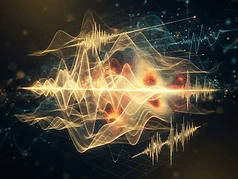
Local evidence stays connected to the machine's history.
Vibration, thermal, motion and system state read together.
One Physical AI architecture, many assignments
The platform is intended to adapt its context and observation strategy to the asset rather than forcing every asset into one narrow monitoring product.
Rotating equipment
Motors, pumps, compressors, bearings and driven systems where vibration, acoustics, temperature and motion tell different parts of the story.
Production equipment
CNC machines, conveyors, presses and other systems whose behavior changes with load, tooling, material and operating state.
Electrical & control spaces
Cabinets and equipment where thermal, field, environmental and machine telemetry can provide complementary evidence.
Process environments
Physical spaces where machine behavior and ambient conditions interact rather than belonging to a single sensor channel.
Compute & facility infrastructure
Server rooms, edge systems, HVAC and supporting infrastructure where physical and system telemetry can be evaluated together.
OT-connected environments
Places where network and machine state may explain—or rule out—the cause of a physical change.
Your equipment may already be telling you enough to begin.
Many environments already contain a nervous system. Controllers, operating systems, network equipment, power systems and embedded devices continuously expose state about what they are doing. Where that information is available, SynapticSteel can treat those existing signals as observation channels and add physical sensing only where it creates additional evidence.
If your equipment already knows something about itself, the TelePod can start there.
Connect to useful existing telemetry, establish temporal context, preserve evidence, and then decide where vibration, acoustics, thermal, motion, distance or other physical sensing would make the picture stronger.
The TelePod does not have to begin with a sensor installation
This expands the same persistent-observation architecture into environments where rich machine state already exists. The goal is not to replace physical sensing; it is to stop treating a new sensor package as the only doorway into physical intelligence.
Data centers & equipment rooms
Servers, GPUs, switches, storage, UPS systems, PDUs, HVAC and environmental controllers already expose a dense stream of operational state. A TelePod can begin learning relationships across that existing telemetry before a new physical sensor is added.
Buildings & facility systems
Chillers, air handlers, boilers, pumps, elevators, lighting controls and access systems often already report alarms, operating states, temperatures, loads and controller data that can become temporal evidence.
Utilities & infrastructure
Pump stations, substations, water systems, generators, compressors and remote cabinets can combine existing control, communications, power and equipment telemetry into a persistent local operating history.
Controls & automated cells
PLC tags, controller state, cycle times, motor current, faults, robot status and machine events can be observed together so changes are interpreted in the context of the production state that produced them.
Labs & test systems
Instruments, test stands, computers and development systems already produce measurements, logs and state. A persistent observer can retain those streams as one time-aligned experimental history instead of isolated files and dashboards.
Mobile & distributed equipment
CAN or J1939 state, ECU data, battery systems, controller telemetry, positioning and onboard compute health can provide a starting nervous system for vehicles and field equipment without requiring a custom sensor installation on day one.
Physical sensing becomes an augmentation layer—not an admission ticket.
A deployment can begin with controller state, network events, system health, power information or existing machine telemetry. Later, physical channels can be introduced deliberately where they answer questions the digital state cannot. The machine's retained understanding gains another source of evidence without throwing away the history already associated with the asset.
Assign an observer. Teach it the environment.
Instead of buying a completely different intelligence stack for every physical question, the long-term SynapticSteel model is a common edge architecture configured around the asset and the evidence that matters there.
Give it a physical assignment.
Define the machine, environment and operating context the TelePod is expected to observe.
Learn the asset without assuming it is healthy.
Establish an observed initial state across the available senses and operating conditions. Stability becomes context; health still requires evidence.
Accumulate useful experience.
Retain evidence and temporal patterns so future changes can be compared with more than a fixed threshold table.

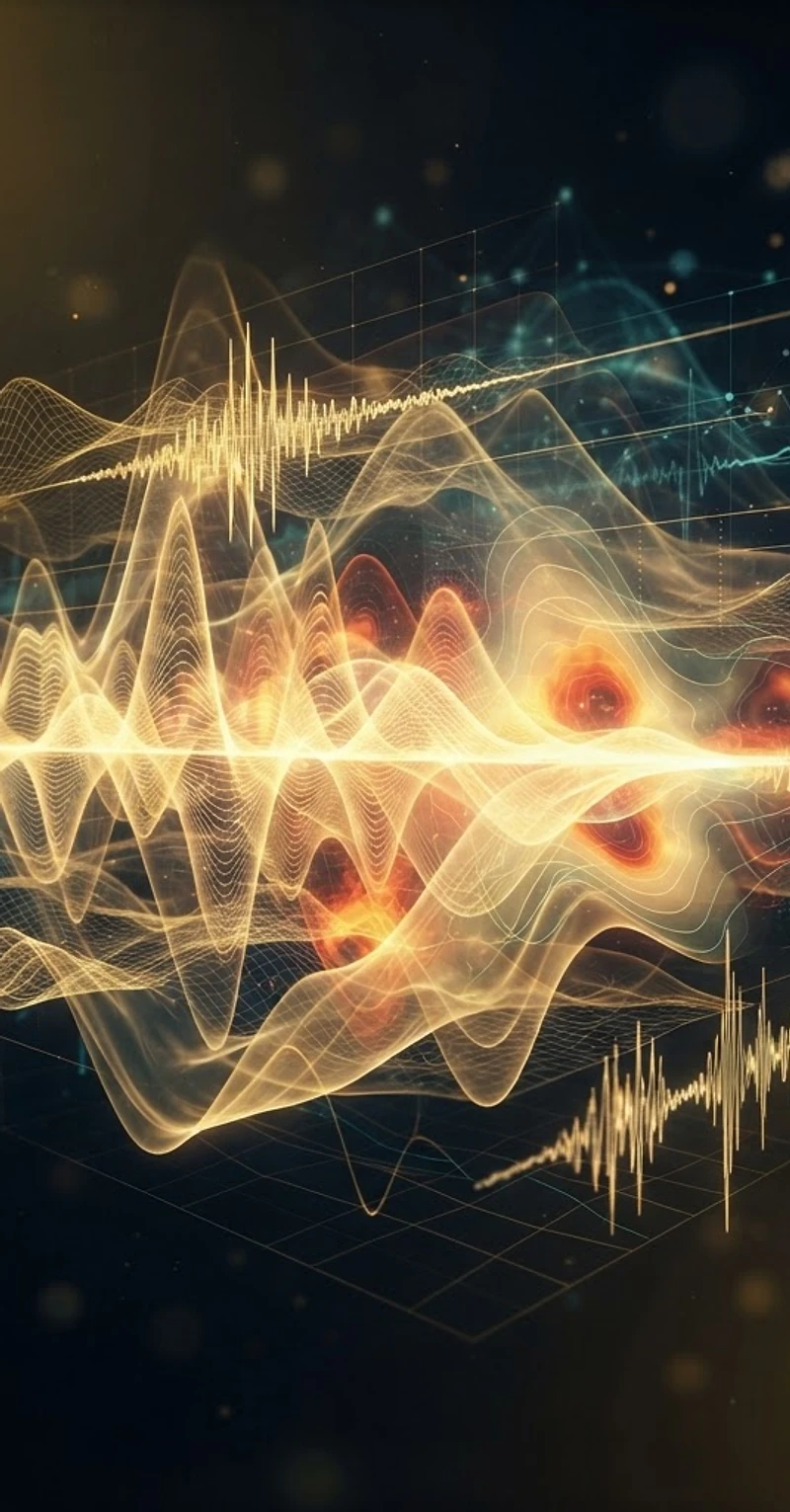
A manual records procedure. An observer can record experience.
Industrial knowledge is both planned and lived. Maintenance schedules describe what is intended, work records describe what actually occurred, operators contribute observations and intuition, and physical evidence records how the machine responded. SynapticSteel is being designed to keep those forms of context together without pretending they carry the same authority.
Observed state
Stable does not automatically mean healthy.
Human context
A planned inspection and operator observation join the timeline as attributable context.
Confirmed intervention
Work actually performed becomes a durable marker in the machine history.
Response observed
The system compares what followed without claiming cause.
The next generation of industrial knowledge should combine what the machine experienced with what its people knew at the time. Planned work, operator observations, confirmed interventions, physical evidence and later outcomes can become part of the same retained record while remaining clearly attributable.
That means a future investigation can ask not only “What was the approved procedure?” but also “What changed before the event, what was tried, what happened afterward, and has this sequence occurred before?”
Useful experience includes the interventions that did not work.
A maintenance action, configuration change or operating adjustment should not disappear from institutional memory just because it failed to improve the condition. Retaining the action, the surrounding evidence and the outcome can help a future operator avoid repeating the same response under similar circumstances.

If your machines are more complicated than a red light and a green light, we should talk.
We are interested in industrial partners and field environments where machine evidence, operating history and human maintenance context can reveal relationships that current monitoring leaves disconnected.
Discuss your environment